Explore Alcast for Advanced Manufacturing
The Art and Science of Aluminum Metal Casting: Approaches for Outstanding Quality
Aluminum metal casting represents a fusion of creative craftsmanship and engineering precision. Achieving exceptional results demands a comprehensive grasp of material behavior and casting processes. Multiple approaches, like sand and die casting, serve varying production demands, each bringing particular strengths and limitations. When producers strive for superior results, incorporating advanced technologies and rigorous quality control practices proves critical. This examination uncovers the subtle factors that can significantly influence the finished product's effectiveness.
The Basics of Aluminum Metal Casting
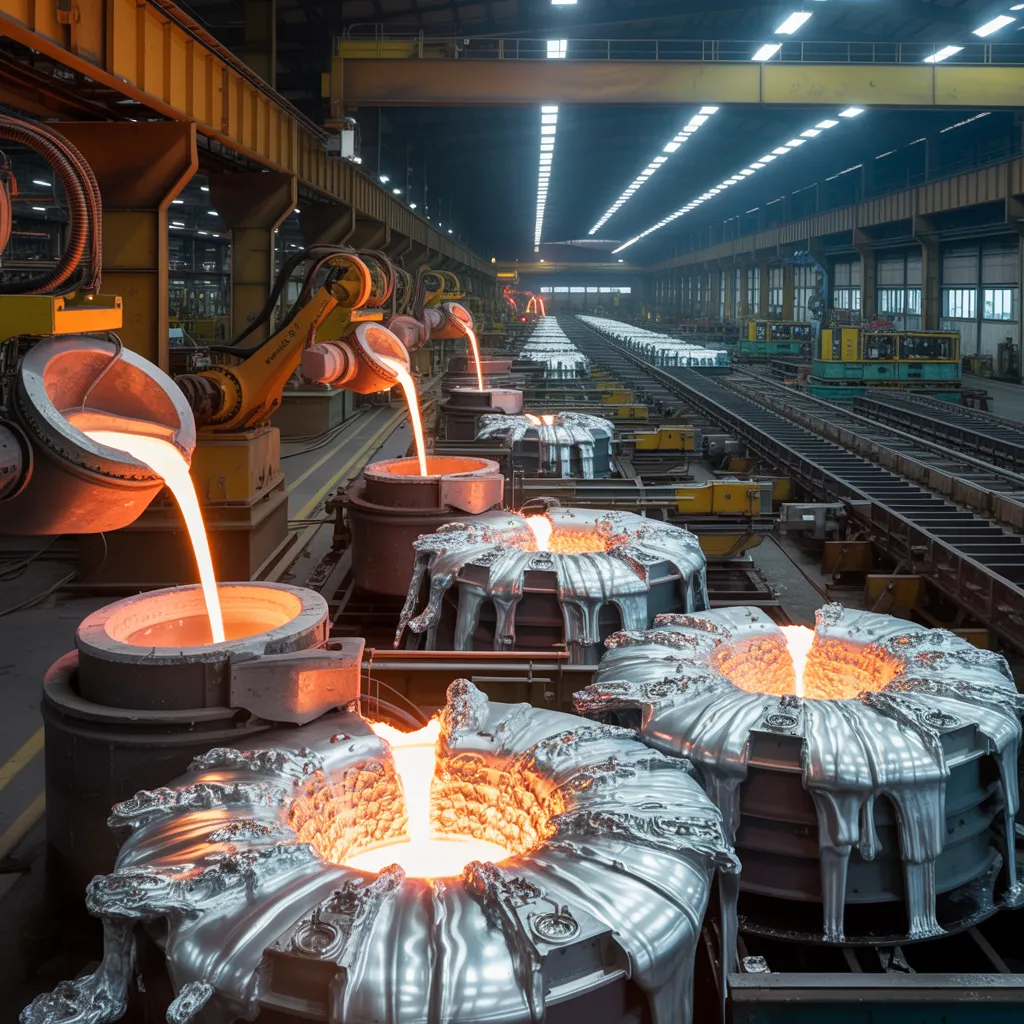
Aluminum metal casting functions as a fundamental method in industrial production, enabling the creation of intricate shapes and components. The process entails filling a mold with molten aluminum, where it solidifies into the desired form. Aluminum's adaptability supports numerous uses across multiple industries, from automotive manufacturing to aerospace engineering.
Key to successful casting is the preparation of the mold, which can be constructed from materials including metal, sand, or ceramic. Every type of mold provides distinct advantages, impacting the final product's surface finish and dimensional accuracy.
Thermal regulation is another essential consideration; preserving the correct melting point ensures optimal fluidity and minimizes defects. Furthermore, incorporating alloying elements can improve aluminum's mechanical characteristics, customizing it for particular applications. Comprehending these essential basics empowers manufacturers to leverage aluminum casting successfully, delivering premium, resilient components that comply with demanding industry benchmarks.
Comparing Aluminum Casting Techniques: Pros and Cons
When comparing aluminum casting methods, every method offers unique benefits and drawbacks that affect fabrication decisions. Sand casting techniques, for example, proves to be economical and adaptable, suitable for complex shapes, but may result in reduced dimensional precision and surface quality. The die casting process, in contrast, provides superior precision and outstanding surface quality, making it ideal for mass production. Nevertheless, the initial setup costs can be considerable, reducing its suitability for low-volume manufacturing.
Investment casting delivers outstanding detail and an impressive surface finish, suitable for intricate designs, though the process is lengthy and may come with increased costs. Additionally, gravity casting is simpler and less expensive, but its limitations in achieving finer details can be a downside. Ultimately, selecting the appropriate aluminum casting technique copyrights on balancing production volume, cost, part complexity, and desired quality, requiring a thorough evaluation of each method's unique characteristics.
Exploring Aluminum Characteristics for Improved Casting Quality
The distinctive characteristics of aluminum serve a critical function in influencing cast product quality and effectiveness. The metal's lightweight composition paired with exceptional strength-to-weight ratios, makes aluminum a superior choice for a wide range of applications. The superior thermal conductivity of the metal enables effective heat distribution during the casting process, minimizing the occurrence of defects such as warping or cracking. Moreover, aluminum's reduced melting threshold enables more convenient forming and handling, contributing to greater design complexity and precision.
The alloying elements in aluminum can significantly impact its properties. As an example, elements like silicon improve fluidity, helping to fill molds more effectively, while magnesium enhances strength and corrosion resistance. The grain structure formed during solidification also has an impact on mechanical properties; smaller grains tend to produce greater toughness. A thorough understanding of these properties allows engineers and foundry workers to identify the most appropriate alloys and casting techniques, thereby achieving superior quality and performance across finished products.
Essential Mold Setup Techniques for Aluminum Foundry Work
Adequate mold preparation is critical to achieving high-quality aluminum castings. The primary step consists of complete cleaning to eradicate any impurities, like dust or oils, which can compromise the casting surface. Following this, using a proper release agent is necessary; this keeps the aluminum from bonding to the mold, facilitating a clean release. The selection of release agent must correspond to the mold material—popular choices include silicone sprays or waxes.
Additionally, the mold temperature should be meticulously regulated. A thermally prepared mold can boost the flow of aluminum, reducing the likelihood of defects like cold shuts. Additionally, checking for any flaws in the mold surface is vital; any irregularities can lead to surface defects in the final product. As a final step, ensuring proper alignment of mold halves during assembly is imperative to maintain dimensional accuracy. These meticulous preparation steps considerably affect the quality and integrity of the final aluminum casting.
Troubleshooting Common Issues in Aluminum Metal Casting
Typical challenges in aluminum metal casting can considerably influence the final product's quality and performance. One prevalent concern is porosity, which stems from gas entrapment throughout solidification. This can be addressed by ensuring proper venting in molds and keeping optimal pouring temperatures. Another common issue is mold misalignment, causing inaccurate dimensions. Routine inspection and exact alignment at setup are essential to prevent this. Moreover, surface flaws like roughness and blemishes can develop because of impurities or inadequate cooling rates. Adopting strict cleanliness measures and regulating cooling rates can assist in mitigating these problems. Finally, inadequate filling can lead to unfinished cast products. This problem may be corrected by refining the pouring approach or improving the metal's fluidity. By identifying and resolving these frequent issues, manufacturers can enhance the reliability and performance of their aluminum cast products.
Innovations in Aluminum Casting Technology
Progress in aluminum casting technology are overcoming many of the issues experienced in the industry. Recent innovations, such as the incorporation of 3D printing, are allowing the production of complex geometries that standard methods have difficulty creating. This technology enables faster prototyping and shorter lead times, which increases flexibility in design. Moreover, the integration of automation systems has strengthened accuracy and reliability in the casting process, decreasing errors caused by human involvement.
Moreover, new alloys and advanced cooling techniques are enhancing the mechanical properties of cast aluminum, making it suitable for a broader spectrum of industries. Smart sensors and IoT integration are also being see now utilized to observe casting processes as they occur, facilitating data-driven decision-making. Collectively, these innovations not only improve efficiency but also reduce waste, placing aluminum casting as a greener manufacturing alternative in a rapidly evolving industry.
Quality Management Strategies Dedicated to Aluminum Casting
Quality management in aluminum casting is essential to secure the reliability and effectiveness of the finished product. Key strategies include careful material selection, strict process monitoring practices, and efficient defect detection approaches. These elements jointly contribute to maintaining superior standards and minimizing the risk of casting defects.
The Significance of Material Selection
Material choice is a critical factor in the aluminum casting procedure, significantly impacting the final product's durability, strength, and overall performance. Choosing the appropriate aluminum alloy is essential, as different alloys possess varying properties such as tensile strength, corrosion resistance, and thermal conductivity. To illustrate this point, alloys like 6061 offer excellent mechanical properties, rendering them ideal for structural applications, while 356 alloys are preferred for their fluidity during casting and resistance to stress. Moreover, impurities and variations in composition can adversely affect the quality of the cast. Careful material selection enhances both product reliability and manufacturing efficiency. Through the use of high-quality materials, manufacturers are able to ensure lasting consistency in their aluminum cast components, while meeting the demands of industry standards and customer expectations.
Process Observation Strategies
Employing reliable process monitoring techniques is essential for sustaining the consistency of aluminum manufacturing processes. These techniques encompass real-time monitoring and data analysis to verify that operations stay within defined limits. Essential methods encompass monitoring temperature, pressure, and flow rates during the production process. Implementing sensors and automated solutions can provide immediate feedback, allowing for timely adjustments. copyright-based techniques further enhance quality assurance by spotting trends and fluctuations in production. Furthermore, keeping comprehensive documentation of every step of the operation facilitates traceability and enables continuous advancement. By incorporating these oversight strategies, producers can reduce deviations, improve product uniformity, and ultimately deliver exceptional quality in aluminum castings.
Flaw Detection Approaches
Flaw identification techniques are crucial in guaranteeing the integrity and effectiveness of aluminum castings. These approaches cover numerous procedures, including surface examination, ultrasonic testing, and radiographic examination. Visual inspection allows for the identification of surface defects, while ultrasonic examination effectively detects internal flaws such as voids and inclusions. Radiographic analysis employs X-rays to uncover concealed structural defects. Moreover, liquid penetrant testing can reveal cracks and porosity on the surface. Sophisticated techniques, including CT scanning, deliver 3D visualization of castings to examine structural quality. Implementing these defect detection strategies enhances quality control, decreases production waste, and ensures compliance with industry standards. As a result, an all-encompassing approach to defect detection is crucial for reaching the highest casting quality standards.
Frequently Asked Questions
What Safety Precautions Should I Take During Aluminum Casting?
In the process of aluminum casting, personnel are required to wear protective gear, such as heat-proof gloves, full-face protection shields, and protective safety glasses. Establishing proper ventilation, keeping a tidy work environment, and adhering to machinery safety protocols are vital for mitigating workplace risks and promoting workplace safety.
What Is the Best Way to Recycle Aluminum Scrap for Casting?
In order to recycle aluminum scrap for casting, you should clean the material, sort by alloy type, use a furnace to melt the scrap, and pour into molds. This method minimizes waste and promotes sustainable practices in metal fabrication.
What Equipment Is Essential for Beginners in Aluminum Casting?
Beginners in the aluminum casting process need key tools such as a melting furnace, crucibles, molds, handling tongs, protective equipment, and a casting ladle. Proper tools guarantee safety and enhance the overall quality of casting for new practitioners.
How Can Environmental Factors Influence Aluminum Casting
Environmental factors heavily affect aluminum casting by altering humidity, temperature, and air quality. Variations can lead to defects, alter cooling rates, and influence the metal's properties, necessitating careful monitoring and adjustments during the casting process.
What Are the Most Effective Best Practices for Post-Casting Finishing?
Best practices for post-casting finishing consist of meticulous cleaning, adequate surface preparation, implementing protective coatings, and utilizing techniques like polishing, machining, or anodizing to boost durability and aesthetic quality, guaranteeing superior final products in the aluminum casting process.