Alcast: Trusted Manufacturing Expert for Precision Parts
Within a Casting Foundry: The Heart of Metal Manufacturing
Within a foundry operation, activities occur that are essential to metal manufacturing. Industrial furnaces transform alloys into liquid forms, while experienced technicians manage intricate molds. Automation holds significant importance, boosting productivity and sustainable practices. However, the sector faces significant hurdles that could affect its long-term outlook. Examining these factors exposes more than standard output metrics; it illuminates a complex interplay of tradition and innovation. What the future holds for this fundamental sector?
The Basics of Metal Casting
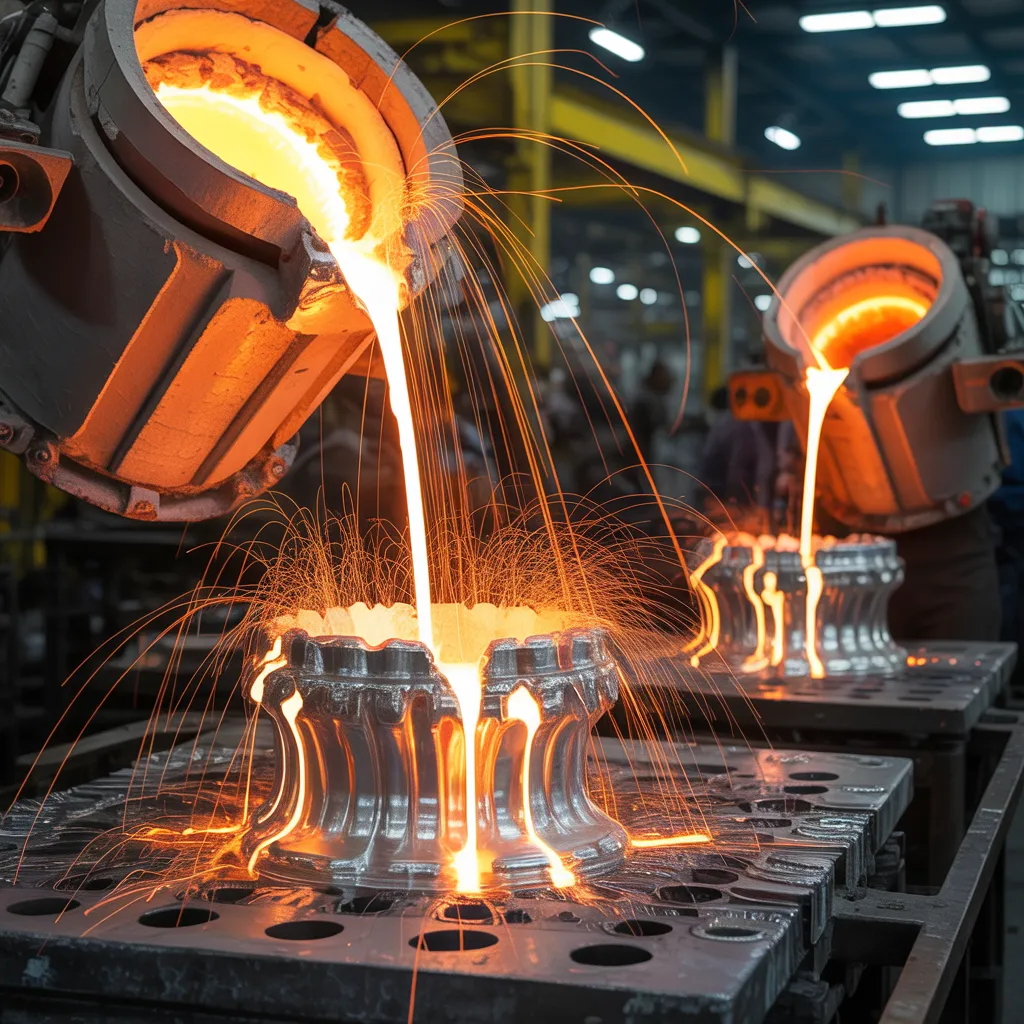
Metal casting acts as a foundational process in modern manufacturing, converting liquid metal into solid shapes. This method has been used for centuries, permitting artisans and manufacturers to craft components with complex shapes and accurate dimensions. The procedure starts with choosing appropriate metal alloys, which are afterward heated and melted at high temperatures.
After melting, the metal is transferred into molds built to define the final product. These casting molds can be produced using a range of materials, including sand, metal, and ceramic, depending on the production volume and required specifications.
When the metal cools down and solidifies, the mold is taken away, exposing the cast object. This technique offers significant advantages, such as decreased material waste and the capacity to manufacture complex geometries that would be hard to attain through alternative manufacturing methods. Grasping these fundamentals is essential for understanding the value of metal casting in contemporary manufacturing.
Key Processes in Metal Casting: Melting, Molding, and Refinement
The art of metal casting unfolds through three fundamental steps: melting, shaping, and refinement. To begin, metal is heated in a furnace until it achieves a liquid molten state, allowing for easier manipulation. The melting process is a critical step, as it determines the quality of the final product.
Next, the melted metal is directed into casting molds, Metal Foundry which mold it into defined shapes. The selection of molding material—such as sand, metal, or ceramic—influences the finished casting's surface finish and dimensional accuracy.
Finally, the refinement process includes allowing the cast metal to cool and solidify, with subsequent processes such as heat treatment, machining, or polishing to enhance its mechanical properties. This stage guarantees the final product adheres to strict quality standards and precise specifications. Each of these processes is essential, supporting the overall productivity and quality of metal casting, culminating in high-quality components for various industries.
Advancements in the Modern Foundry Industry
As the foundry industry evolves, new developments are transforming conventional methods, boosting performance and eco-conscious operations. Advances in technology, including 3D printing, are overhauling how molds are produced, enabling intricate designs and shorter production timelines. This technique not only cuts down on waste but also promotes personalization, fulfilling unique customer needs more efficiently.
In addition, the incorporation of automated robotics systems streamlines operations, enhancing productivity and decreasing the likelihood of human error. Intelligent manufacturing systems, including IoT-enabled sensors, provide live data analytics, supporting exact operational tracking and proactive predictive maintenance.
In addition, eco-friendly materials and techniques are increasingly being adopted, decreasing the environmental impact of foundry operations. The utilization of recycled metals and low-energy smelting systems reflects a transition towards more environmentally responsible practices, advancing worldwide environmental objectives. These developments collectively contribute to a stronger and more sustainable foundry sector, well-positioned to meet upcoming demands while responding to the shifting expectations of the sector.
What Challenges Do Casting Foundries Face?
What difficulties do casting foundries experience in an rapidly developing industry? One significant challenge is the instability in raw material expenses, which can severely impact production budgets. Additionally, environmental regulations are growing ever more demanding, compelling foundries to invest in cleaner technologies to minimize environmental impact. This transition demands significant capital investment, which can create financial pressure for smaller businesses.
Additionally, foreign manufacturer competition commonly creates pricing challenges, making it difficult for domestic foundries to sustain profit margins. These facilities also struggle with adjusting to swift advances in technology, such as digitalization and automated processes, which call for ongoing training and investment.
Ultimately, disruptions within the supply chain, made worse by international developments, present an ongoing risk, disrupting the on-time delivery of components and materials. In combination, these difficulties necessitate metal casting operations to become agile and innovative to thrive in a challenging industry landscape.
The Importance of Skilled Workers in Casting Foundries
Although automation and technology persistently transform the manufacturing landscape, experienced labor remains a critical pillar in foundry operations. The detailed demands of metal casting demands a level of expertise that automated systems cannot fully achieve. Experienced professionals have the capability to evaluate detailed specifications, choose suitable alloys and compounds, and troubleshoot issues that arise during the manufacturing workflow. Their hands-on experience is essential for guaranteeing precision and consistency, especially in demanding applications that demand exact specifications.
In addition, skilled workers play a vital role in overseeing and improving equipment, ensuring that production runs smoothly and efficiently. As casting techniques advance, these laborers are also entrusted with updating and enhancing procedures, integrating new technologies while retaining traditional craftsmanship. Within this evolving landscape, the collaboration between experienced workers and technological progress is essential for preserving the excellence and consistency that distinguish reputable casting foundries.
Future Trends in Casting: What's Next for the Industry?
Growing developments in the casting industry are set to transform its future, driven by technological progress and shifting market requirements. Artificial intelligence and automation are increasingly streamlining production processes, enhancing precision and lowering operational expenses. In addition, the adoption of 3D printing technology is reshaping mold production, enabling advanced design possibilities and reduced lead times.
Sustainability is increasingly taking center stage as companies aim to minimize their environmental footprint. This includes using recycled materials and developing energy-efficient practices within foundries. Moreover, the growing need for lightweight materials, especially in the automotive and aerospace industries, is driving advancements in alloy development.
The field is equally observing a movement in the direction of digitalization, where IoT solutions support real-time monitoring and predictive maintenance. As these trends converge, the casting field is poised to witness significant transformations, equipping itself to address the complexities of a fast-shifting international market.
Common Questions and Answers
Which Types of Metals Are Most Frequently Cast in Foundries?
Frequently cast metals in foundries consist of aluminum, iron, steel, bronze, and brass. Each metal possesses unique properties, rendering them ideal for a wide range of applications, from automotive components to decorative items, demonstrating the adaptability of casting processes.
What Are the Environmental Impacts of Metal Casting?
Metal casting affects the environment through waste generation, emissions, and energy consumption. It can contribute to pollution of air and water, while also requiring considerable resources, prompting the need for sustainable methods and technologies in the field.
What Safety Measures Are in Place for Foundry Workers?
Foundries utilize numerous safety measures, including safety equipment, ventilation setups, periodic safety training, and rigorous compliance with established safety standards. These measures are designed to limit potential dangers and guarantee a secure work environment for all employees.
How Are Casting Flaws Detected and Addressed?
Casting flaws are detected using visual examinations, dimensional assessments, and non-destructive evaluation techniques. Addressing these issues involves modifying procedures, fixing flaws, or repeating the casting process as needed to maintain quality standards and conformance to requirements.
What Does a Standard Casting Production Timeline Look Like?
A typical manufacturing timeline for a casting encompasses a number of stages: pattern creation, mold making, pouring, cooling, and finishing. This process generally spans from a couple of days to multiple weeks, depending on complexity and production volume.